
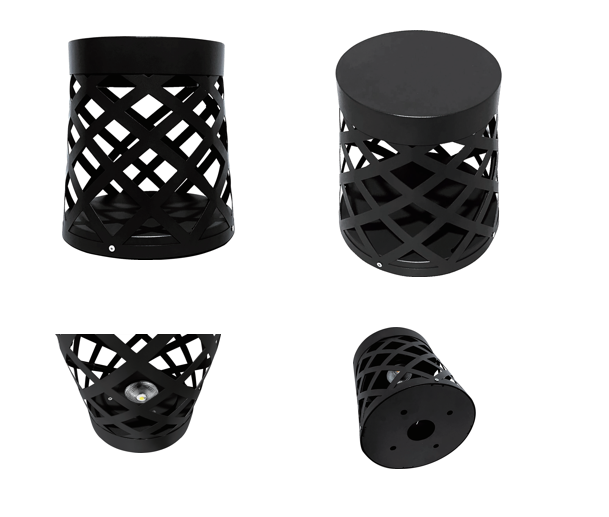
Outdoor bollard lights are widely used in pathways, parks, residential developments, hospitality landscapes, and commercial outdoor spaces.
But choosing the right bollard light is not always straightforward. Height, light distribution, glare control, durability, and project environment all play important roles in selecting the right fixture.
Below are several key factors professionals consider when choosing bollard lights for outdoor projects.
1. Installation Height and Lighting Coverage
One of the first things to consider when choosing bollard lights is the fixture height.
Different heights provide different lighting effects and coverage areas.
Typical bollard heights include:
- Low height (300–600 mm) — suitable for garden pathways and residential landscapes
- Medium height (600–900 mm) — commonly used for pedestrian walkways
- Full height (900–1200 mm) — used in commercial projects and public spaces
Lower fixtures create subtle guidance lighting, while taller bollards provide wider illumination for larger areas.
2. Light Distribution and Glare Control
Glare control is one of the most important aspects of outdoor bollard lighting design.
Poorly designed bollards can cause discomfort glare for pedestrians, especially when light sources are directly visible.
Many projects therefore use:
- Louvered bollard lights
- Shielded light sources
- Recessed optical designs
These solutions help control light distribution and improve visual comfort in outdoor environments.
Anti-glare bollards are particularly popular in hospitality landscapes, residential developments, and public pedestrian areas.
3. Durability and Outdoor Protection
Because bollard lights are installed outdoors, durability is critical.
Important specifications include:
- IP rating (e.g., IP65) for water and dust protection
- IK rating for impact resistance
- Corrosion-resistant materials such as aluminum or stainless steel
Projects in coastal environments or public areas often require stronger corrosion resistance and higher impact ratings.
4. Design Style and Architectural Integration
Bollard lighting is not only functional — it also contributes to the visual identity of a space.
Different projects may prefer different design styles:
- Cylindrical bollards for modern landscape architecture
- Square or rectangular designs for contemporary urban spaces
- Decorative bollards for hospitality and resort environments
Choosing a design that complements the architecture helps create a cohesive outdoor lighting experience.
5. Energy Efficiency and LED Performance
Most modern outdoor bollard lights use LED technology.
LED bollards provide several advantages:
- Lower energy consumption
- Long service life
- Consistent illumination
- Reduced maintenance
Color temperature is another factor to consider.
Typical options include:
- 3000K warm light for hospitality and residential environments
- 4000K neutral light for commercial outdoor spaces
Choosing the Right Bollard Lighting Solution
Selecting bollard lights involves balancing several factors including height, optical control, durability, and architectural design.
When these elements are considered together, bollard lighting can significantly enhance outdoor safety, navigation, and visual atmosphere.
As landscape architecture and outdoor public spaces continue to evolve, well-designed bollard lighting will remain an essential part of modern lighting design.