
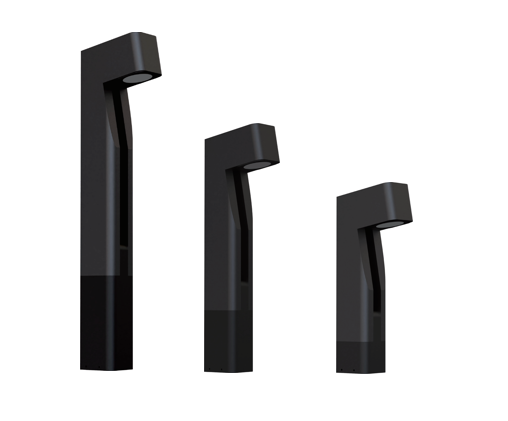
Bollard light height
seems like a simple specification.
But in real outdoor projects,
height changes how the entire space feels.
Too low, and the lighting becomes ineffective.
Too tall, and glare becomes uncomfortable.
The right height depends not only on the fixture itself —
but also on the project environment.
1️⃣ There is no “best” bollard light height
Many buyers ask:
What is the standard bollard light height?
In practice, there is no universal answer.
The correct height depends on:
- Path width
- Lighting purpose
- Fixture design
- Viewing angle
- Surrounding environment
That’s why the same fixture height
can work well in one project
and poorly in another.
2️⃣ Common bollard light height ranges
In practical projects, typical heights are:
- 400mm – 600mm → pathways and gardens
- 600mm – 900mm → landscape and residential projects
- 900mm – 1200mm → commercial or public outdoor areas
These are not strict rules,
but common project references.
3️⃣ Lower height does not always mean less glare
This is a common misunderstanding.
Some low bollard lights still create strong glare because:
- The light source is directly visible
- Shielding is insufficient
- Light spreads horizontally
Meanwhile, a taller fixture with better shielding
may feel much more comfortable.
👉 Glare control depends on design — not height alone.
4️⃣ Height affects the visual rhythm of a project
Bollard lighting is not only functional.
It also affects:
- Visual balance
- Landscape appearance
- Perception of space
For example:
- Very tall bollards may dominate small pathways
- Very short bollards may disappear visually in large spaces
Good projects usually maintain
a balanced visual rhythm.
5️⃣ Consider maintenance and site conditions
Height also affects long-term usability.
Taller fixtures may:
- Be easier to identify from distance
- Improve visibility in larger spaces
Lower fixtures may:
- Integrate better into landscape design
- Reduce visual obstruction
The best choice depends on
how the space will actually be used.
6️⃣ Start from the project, not the product
A practical approach is:
- Understand the project environment
- Define the lighting purpose
- Evaluate fixture proportion within the space
- Review glare and spacing together
👉 Height should support the project — not define it.
🔚 Final thought
In outdoor lighting projects,
bollard light height is not just a number.
It influences:
- Comfort
- Visibility
- Visual experience
- Overall project quality
A well-chosen height often goes unnoticed —
and that is usually a sign the design works well.